
Aluminum Board Guide: Expert Tips & 2025 Update
Tired of materials that warp, rust, or fail under pressure? Aluminum board offers a powerful solution—lightweight yet incredibly strong, resistant to corrosion, and perfect for demanding environments. Whether you’re tackling a DIY project, upgrading industrial equipment, or designing modern architecture, aluminum board delivers unmatched durability and versatility. From marine applications to signage and transportation, its excellent strength-to-weight ratio makes it a top choice across industries. Easy to cut, shape, and maintain, this high-performance material saves time and money over the long haul. Discover how aluminum board can transform your next build with reliability, efficiency, and a sleek, modern finish that stands the test of time.
How Aluminum Board Works: A Comprehensive Guide
Direct Answer:
“Aluminum board” typically refers to engineered composite or honeycomb panels made from aluminum skins bonded to a core material such as polyethylene, foam, or an aluminum honeycomb structure. These boards are lightweight, durable, and highly versatile, used in signage, architecture, transportation, and interior design. They offer superior strength-to-weight ratios, excellent weather resistance, and ease of fabrication, making them a preferred alternative to solid metal sheets.
What Is Aluminum Board?
Aluminum board is not a single uniform product but a category of engineered panel systems that use aluminum as a facing or structural component. The most common types include:
- Aluminum Composite Material (ACM): Two thin aluminum sheets bonded to a polyethylene or fire-retardant core.
- Aluminum Honeycomb Panels: Face sheets of aluminum bonded to a hexagonal aluminum honeycomb core.
- Foam-Core Aluminum Panels: One or both sides of a rigid foam core laminated with aluminum.
These boards combine the strength and aesthetics of aluminum with the lightness and insulation properties of their core materials.
Key Characteristics
- Lightweight: Up to 50% lighter than solid aluminum sheets.
- Dimensionally Stable: Resists warping, oil canning, and thermal expansion.
- Durable: Resistant to corrosion, UV radiation, and weathering.
- Fabrication-Friendly: Can be cut, routed, bent (with V-grooving), and printed on.
- Aesthetic Flexibility: Available in numerous colors, finishes (brushed, polished, anodized), and textures.
Types of Aluminum Boards
1. Aluminum Composite Material (ACM) Panels
ACM panels are the most widely used form of aluminum board. They consist of two pre-painted or mill-finish aluminum sheets (typically 0.2–0.5 mm thick) bonded to a polyethylene (PE) or mineral-filled fire-retardant core.
Common Applications
- Exterior building cladding
- Interior wall panels
- Signage (channel letters, cabinet signs)
- Retail displays and kiosks
- Transportation (food trucks, emergency vehicles)
Brands and Variants
- ALUCOBOND®: Industry leader with over 90 color/finish options and fire-rated cores.
- Dibond®, Reynobond®, Maxmetal®: Popular in signage and architectural markets.
- Fire-Rated ACM: Uses mineral-filled cores (e.g., ALUCOBOND A2) for high-rise buildings.
✅ Best for: Projects requiring flat, long-lasting panels with excellent printability and weather resistance.
2. Aluminum Honeycomb Panels
These are high-performance structural panels made of two aluminum face sheets bonded to a honeycomb core made of aluminum foil. The honeycomb structure provides exceptional rigidity and strength while minimizing weight.
Key Features
- High Strength-to-Weight Ratio: Ideal for aerospace, marine, and architectural applications.
- Excellent Flatness: Minimal deflection under load.
- Thermal and Acoustic Insulation: Honeycomb core reduces heat transfer and sound transmission.
- Customizable Thickness: Ranges from 0.125″ to 1.0″ or more, with standard sizes of 48″ x 96″, 48″ x 120″, and 48″ x 144″.
Pricing Estimate (Based on Flatiron Panel Products)
| Thickness | Size (inches) | Price Range (Mill Finish) |
|---|---|---|
| 0.125″ | 48 x 96 | $375 – $615 |
| 0.500″ | 48 x 96 | $475 – $775 |
| 1.000″ | 48 x 96 | $558 – $912 |
| 1.000″ | 48 x 144 | $836 – $1,368 |
✅ Best for: Structural applications where rigidity, light weight, and durability are critical—such as aircraft interiors, cleanrooms, or high-end architectural facades.
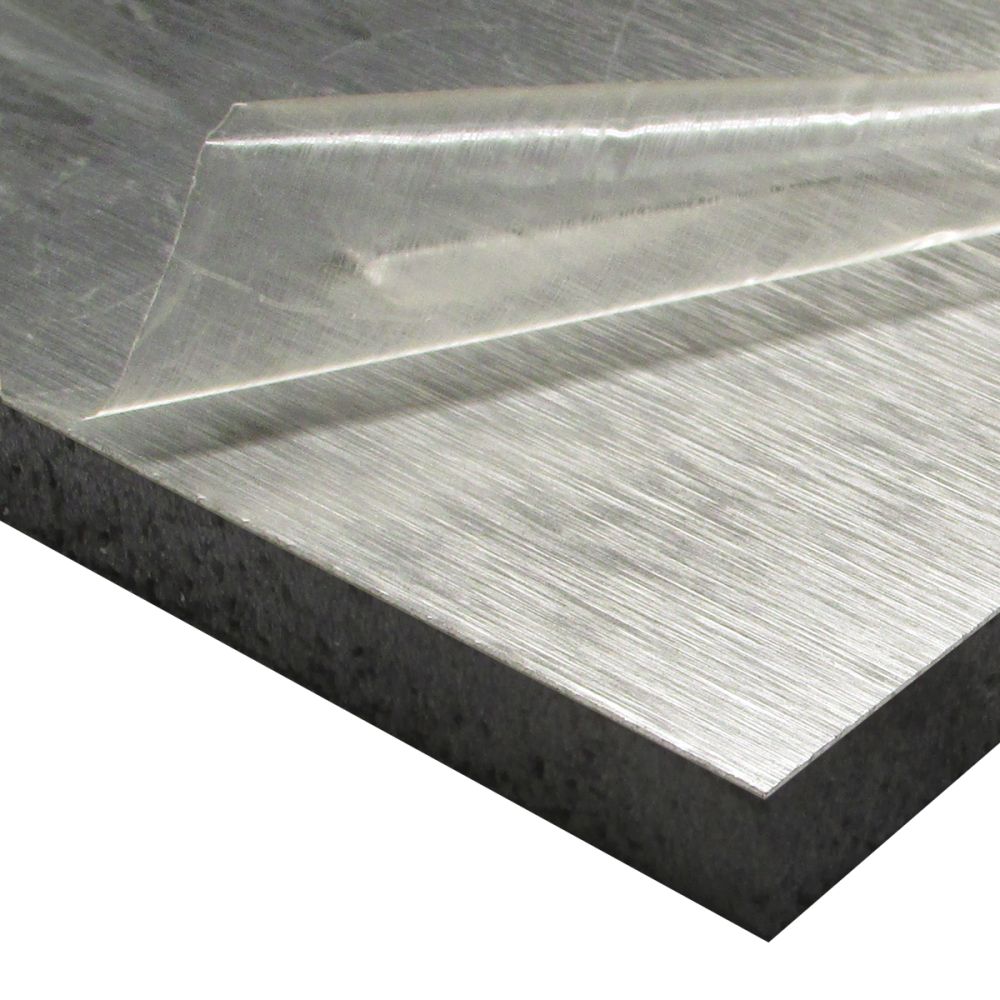
3. Foam-Core Aluminum Boards (e.g., UltraBoard Aluminum™)
These panels feature a polystyrene foam core with one side faced with anodized aluminum and the other with high-impact plastic. They are designed primarily for signage and decorative applications.
Features
- Lightweight and Easy to Route: Ideal for CNC-cut letters and logos.
- Anodized Aluminum Finish: Available in polished gold, brushed gold, polished silver, brushed silver.
- Recycled Content: Some brands contain up to 50% recycled material.
- Thickness Options: From 3/16″ to 3″, in 4′ x 8′ sheets or custom sizes.
✅ Best for: Decorative signage, retail displays, and indoor branding where cost-effective metal appearance is needed.
How Aluminum Boards Are Fabricated and Installed
Cutting and Shaping
Aluminum boards can be processed using standard woodworking or metalworking tools:
– Circular saws with fine-tooth carbide blades
– CNC routers for precision cutting and engraving
– Shears for straight-line cuts
⚠️ Tip: Use coolant or dust collection when routing to prevent melting the core (especially in ACM).
Bending and Folding
Unlike solid aluminum, ACM and composite boards cannot be bent like sheet metal. To create folds:
– V-grooving is used: A router removes part of the back layer, leaving a thin aluminum skin to act as a hinge.
– Groove depth is typically 70–80% of total thickness.
Joining and Mounting
- Mechanical Fasteners: Screws, rivets (use with washers to prevent pull-through).
- Adhesives: High-strength panel adhesives or double-sided tapes (e.g., 3M VHB).
- Subframes: Aluminum honeycomb panels often require aluminum extrusions for support.
Benefits of Using Aluminum Boards
1. Lightweight Construction
- Reduces structural load on buildings.
- Lowers shipping and handling costs.
- Easier to install manually.
2. Durability and Longevity
- Resists corrosion, rust, and UV degradation.
- Maintains color and finish for 10–20 years (depending on coating).
- Minimal maintenance—clean with mild soap and water.
3. Design Versatility
- Can be painted, printed, anodized, or laminated.
- Available in hundreds of colors and finishes, including wood and stone effects.
- Suitable for curved surfaces (with proper grooving).
4. Cost-Effectiveness
- Cheaper than solid aluminum or stainless steel.
- Lower installation and transportation costs due to light weight.
- Long service life reduces lifecycle costs.
5. Sustainability
- Aluminum is 100% recyclable.
- Many ACM and honeycomb panels contain recycled content.
- Energy-efficient manufacturing and long-term performance contribute to green building certifications (e.g., LEED).
Common Applications by Industry
Architecture & Construction
- Exterior Cladding: Rain screens, curtain walls, soffits.
- Interior Wall Panels: Elevators, lobbies, restrooms.
- Ceilings and Partitions: Hospitals, schools, offices.
Signage & Graphics
- Channel Letters: ACM is the standard substrate.
- Monument Signs: Durable, weather-resistant, easy to mount.
- Digital Printing: Maxmetal® DP and similar grades optimized for ink adhesion.
Transportation
- Food Trucks & Trailers: Lightweight, corrosion-resistant siding.
- Emergency Vehicles: Durable and easy to clean.
- Aircraft & Marine Interiors: Honeycomb panels for floors and walls.
Retail & Exhibits
- POP Displays: Lightweight and reusable.
- Trade Show Booths: Easy to assemble/disassemble.
- Store Fixtures: Modern, sleek appearance with low maintenance.
Actionable Tips for Working with Aluminum Boards
1. Choose the Right Grade for the Application
- Outdoor Use: Use ACM with PVDF (Kynar) coating for UV resistance.
- Fire Safety: Specify fire-rated ACM (e.g., mineral core) for high-rise buildings.
- Indoor Signage: Foam-core aluminum boards (like UltraBoard) offer best value.
2. Use Proper Tools and Techniques
- Blades: Use carbide-tipped blades with high tooth count (80+ teeth) to avoid chipping.
- Routing: Use sharp bits and moderate feed speed to prevent melting.
- Drilling: Pilot holes reduce stress on the panel.
3. Handle with Care
- Always store flat to prevent warping.
- Avoid dragging panels across rough surfaces.
- Protect surfaces with peelable film until installation.
4. Seal Cut Edges (Especially for ACM)
- Moisture can penetrate the core if edges are exposed.
- Use edge tape or silicone sealant for outdoor applications.
5. Consider Thermal Expansion
- Aluminum expands with heat—allow for movement in large installations.
- Use slotted holes for fasteners or floating clips.
Pricing and Cost Estimates
Costs vary widely based on type, thickness, finish, and brand. Below are average market prices (as of 2024):
| Type | Size | Thickness | Finish | Price Range |
|---|---|---|---|---|
| ACM Panel | 4′ x 8′ | 3mm (~0.12″) | White, 2-sided | $70 – $90 |
| ACM Panel | 4′ x 8′ | 3mm | Brushed Silver | $100 – $130 |
| Aluminum Honeycomb | 4′ x 8′ | 0.5″ | Mill Finish | $480 – $800 |
| Aluminum Honeycomb | 4′ x 8′ | 1.0″ | Mill Finish | $560 – $920 |
| Foam-Core Aluminum | 4′ x 8′ | 1/2″ | Brushed Gold | $150 – $200 |
| Fire-Rated ACM | 4′ x 8′ | 4mm | Custom Color | $120 – $180 |
💡 Bulk discounts are common—many suppliers offer tiered pricing for 5+ sheets.
Conclusion
Aluminum board is a smart, modern solution for applications demanding strength, light weight, durability, and visual appeal. Whether you’re designing a high-rise facade, fabricating a storefront sign, or building a mobile exhibit, there’s an aluminum board type tailored to your needs. From cost-effective ACM to high-performance honeycomb panels, these materials offer unmatched versatility across industries.
By understanding the differences between ACM, honeycomb, and foam-core boards, and following best practices in fabrication and installation, you can achieve professional, long-lasting results that combine form and function.
Frequently Asked Questions (FAQ)
1. Can aluminum composite panels be bent?
Yes, but not like sheet metal. They require V-grooving on the backside to create clean folds without cracking the aluminum or core.
2. Are aluminum boards fire-resistant?
Standard ACM with polyethylene core is not fireproof. However, fire-rated ACM with mineral-filled cores (e.g., ALUCOBOND A2) meets building codes for high-rise structures.
3. Can you paint or print on aluminum boards?
Yes. ACM panels are ideal for digital printing, especially those labeled “DP” (Digitally Printable). For painting, use epoxy or polyurethane-based paints after proper surface prep.
4. How do you cut aluminum honeycomb panels?
Use a fine-tooth carbide blade or CNC router with a down-cut bit to prevent delamination. Support the panel fully during cutting to avoid crushing the honeycomb core.
5. What is the lifespan of aluminum boards?
With proper installation and maintenance:
– ACM panels: 15–20 years (outdoor), longer with PVDF coating.
– Honeycomb panels: 20+ years in structural applications.
– Foam-core boards: 10–15 years (primarily indoor use).
By leveraging the strengths of aluminum board technology, industries from architecture to signage continue to innovate with materials that are as functional as they are beautiful. Whether you’re a fabricator, designer, or contractor, understanding these panels empowers smarter, more efficient project outcomes.