
Curved Wall Panels: 2025 Guide & Expert Design Tips
Tired of flat, lifeless walls that make your space feel ordinary? Curved wall panels are redefining modern design by transforming bland interiors into dynamic, flowing environments. Whether you’re renovating a home, office, or retail space, these elegant architectural elements add depth, movement, and sophistication where traditional walls fall short. Beyond their striking visual appeal, curved panels enhance acoustics, optimize space, and create a sense of openness. From subtle arches to dramatic, sculptural forms, they offer endless creative possibilities. Discover how curved wall panels can elevate your design aesthetic while solving common spatial challenges—turning restrictive corners into captivating features and uninspired rooms into immersive experiences.
How Curved Wall Panels Work: A Complete Guide for Designers and Builders
Curved wall panels are architectural cladding elements—typically made from wood, metal, or composite materials—that are engineered to bend and conform to curved surfaces such as arched walls, rounded columns, or flowing interior features. They are used to enhance both the aesthetic and functional qualities of a space, offering seamless coverage, improved acoustics, and structural elegance on non-linear walls. Installation often involves flexible substrates, specialized mounting systems, or pre-curved components tailored to specific radii.
Unlike traditional flat panels, curved wall panels allow designers to embrace organic, modern forms without sacrificing finish quality or durability. Whether used in residential interiors, commercial spaces, or exterior architectural accents, they represent a fusion of innovation, design freedom, and material performance.
Types of Curved Wall Panels
Curved wall panels come in various forms, each suited to different applications, design goals, and installation methods.
Flexible Wood Veneer Panels
These are among the most popular options for interior curved walls. Made with thin layers of real wood veneer bonded to a flexible plywood or MDF core, they can be bent around tight radii (as small as 14 inches). Brands like TerraMai and The Wood Veneer Hub offer modular, pre-finished flexible slat panels that install easily over curved substrates.
– Best for: Feature walls, columns, ceilings
– Materials: Oak, walnut, acacia, teak
– Finish: Pre-stained, ready to install
Steam-Bent Solid Wood Panels
Crafted by softening solid wood with steam and shaping it over molds, this method produces strong, elegant curves ideal for high-end furniture or architectural millwork.
– Best for: Custom cabinetry, bespoke interiors
– Limitation: Higher cost and longer lead time
Kerfed Wood Panels
These panels have precision-cut notches (kerfs) on the backside, allowing them to flex along a curve when attached to a curved subframe. The front remains solid and smooth.
– Best for: On-site installations, DIY projects
– Installation tip: Kerfs must face the concave side of the curve
Laminated Curved Panels
Built by gluing multiple thin wood layers under pressure in a curved mold, laminated panels offer superior strength and stability. Commonly used in structural applications or large-scale architectural elements.
– Best for: Arches, domes, exterior canopies
Metal Curved Panels (e.g., CENTRIA)
Made from pre-painted or coated steel or aluminum, these are used primarily in commercial and industrial buildings. They can be curved horizontally or vertically and are ideal for facades, roofs, and canopies.
– Features: Concealed fasteners, weather-resistant, fire-rated
– Applications: Awnings, parapets, trim, industrial exteriors
Benefits of Curved Wall Panels
Aesthetic Appeal and Design Freedom
Curved panels eliminate the rigid geometry of traditional walls, introducing fluidity and movement into a space. They create focal points in interiors and allow for seamless transitions between walls, ceilings, and columns.
“Curved lines return to the primal instinct of harmony and tranquility.” — Barausse
Improved Acoustics
The curved geometry helps diffuse sound waves, reducing echo and improving clarity in rooms like home theaters, auditoriums, or open-plan offices. Wood-based curved panels also naturally absorb mid to high-frequency sounds.
Structural Efficiency
Curved forms are inherently strong. In architecture, curvature distributes stress more evenly than flat planes, enhancing durability—especially in large spans or exposed environments.
Seamless Integration
Flexible panels (like tambour or slat systems) can wrap continuously around corners and columns, eliminating seams and joints. This creates a clean, uninterrupted visual flow.
Sustainability
Many curved wood panels are made from reclaimed or FSC-certified wood, supporting eco-conscious design. Their long lifespan and low maintenance further enhance sustainability.
How to Install Curved Wall Panels: Step-by-Step
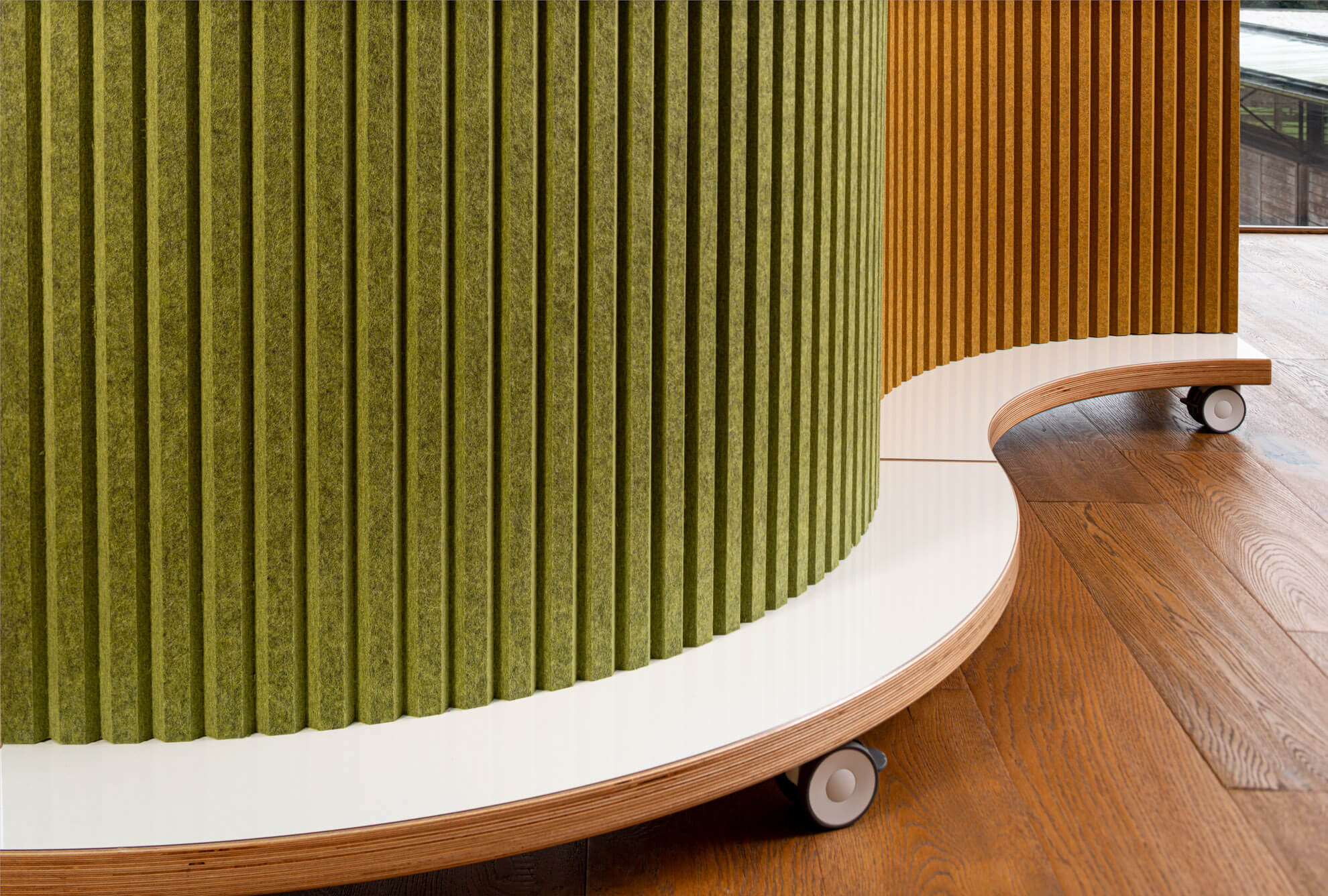
Step 1: Design and Measurement
- Determine the radius of the curve (minimum radius varies by panel type—check manufacturer specs).
- Use CAD or 3D modeling software to plan panel layout and cuts.
- For tight curves ( “Stratlock® revolutionizes curved wall panel installations with micro-adjustments and heavy-duty support.” — Fastmount
Step 4: Install Panels
- Begin at the center or bottom of the curve.
- Secure panels using clips or adhesive (e.g., construction-grade urethane).
- For flexible wood panels, bend gently—do not force.
- Stagger joints if using multiple panels to avoid visible seams.
Step 5: Finishing Touches
- Add corner trims or edge profiles for a polished look.
- Integrate LED lighting behind panels for dramatic backlighting.
- Seal edges if exposed to moisture (especially in bathrooms or exteriors).
Applications of Curved Wall Panels
Interior Design
- Feature walls in living rooms or lobbies
- Ceiling accents in dining areas or home theaters
- Room dividers with soft, flowing shapes
- Columns and pillars wrapped in wood or metal
Commercial & Hospitality
- Hotel reception curves with warm wood finishes
- Office partitions that enhance acoustics and privacy
- Retail displays with sculptural appeal
Architectural Elements
- Arched doorways and entryways
- Stairwell enclosures
- Domes and vaulted ceilings
Exterior Use
- Metal curved panels for canopies, awnings, and facades (CENTRIA)
- Weather-resistant wood panels for covered outdoor areas
- Slat systems with drainage and UV protection
Pricing and Cost Estimates
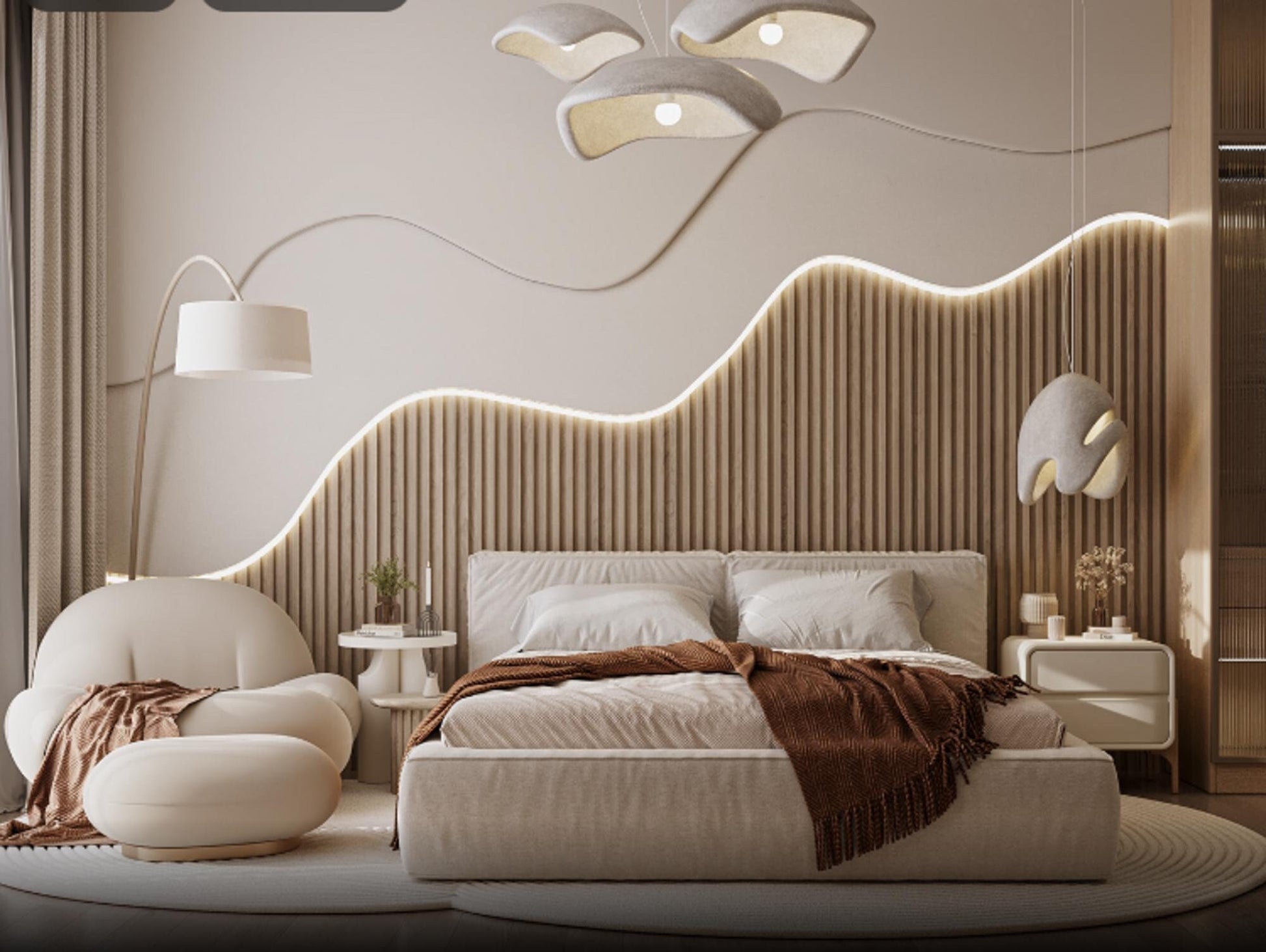
Curved wall panel costs vary widely based on material, size, and installation complexity.
| Panel Type | Average Cost per Sq. Ft. | Notes |
|---|---|---|
| Flexible Wood Veneer Panels | $15 – $40 | Pre-finished, easy install |
| Kerfed Wood Panels | $20 – $50 | Labor-intensive installation |
| Laminated Wood Panels | $40 – $80 | Custom fabrication, high durability |
| Metal Curved Panels (CENTRIA) | $25 – $60 | Includes coating, ideal for exteriors |
| Acoustic Curved Panels | $35 – $70 | Sound-absorbing core, Class-A fire rating |
Sample pricing from The Wood Veneer Hub:
– Flutto® Walnut Slat Panels: $144.99 per panel (47.24” x 47.24”)
– Ultraflex Oak Panels: $79.99 (sale price)
– Panel samples: $2.99
Installation labor can add $10–$25 per sq. ft., especially for custom curves or CNC-fabricated systems.
Actionable Tips for Success
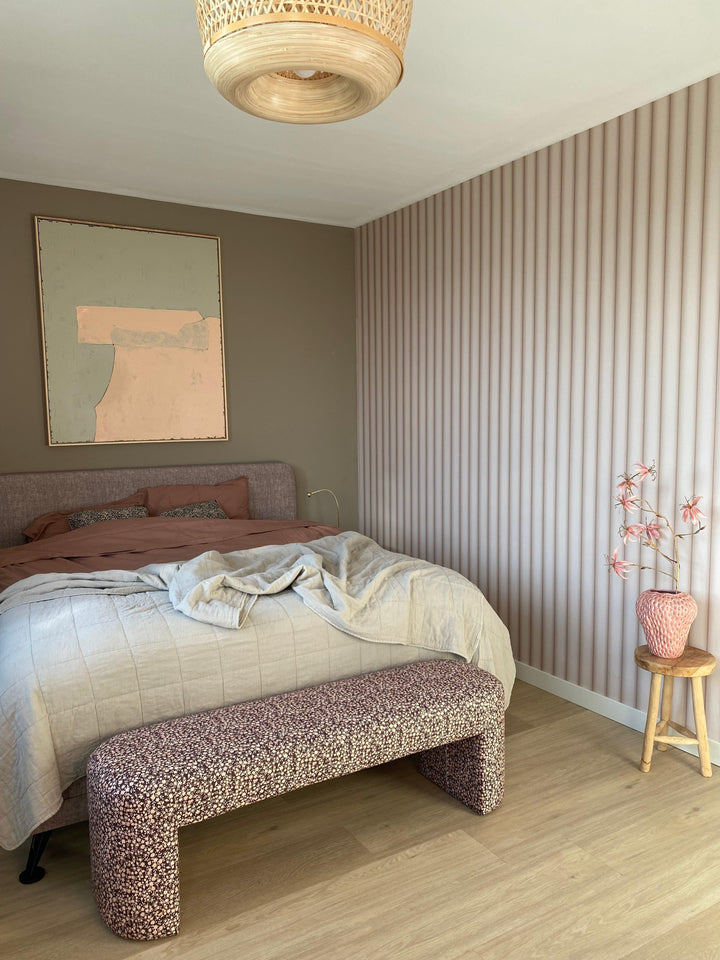
- Always order samples first to test flexibility and color in your space.
- Verify the minimum radius with the manufacturer before finalizing design.
- Use CNC-compatible mounting systems (like Stratlock®) for large commercial projects.
- For tight curves, pre-bend panels gradually to avoid cracking.
- Pair curved panels with LED backlighting to enhance depth and drama.
- Choose fire-rated panels for commercial or public spaces.
- Ensure adequate expansion gaps in high-humidity areas.
Conclusion
Curved wall panels are no longer a niche or prohibitively expensive option—they are a mainstream design solution that combines beauty, functionality, and innovation. From flexible wood veneers that wrap around columns to metal panels shaping bold architectural statements, they offer unparalleled design freedom. With advanced mounting systems like Fastmount’s Stratlock®, installation is now faster, more precise, and adaptable to any substrate.
Whether you’re an architect, interior designer, or DIY enthusiast, curved panels allow you to transform rigid spaces into flowing, organic environments. As materials and technology continue to evolve, the future of walls is not flat—it’s curved.
Frequently Asked Questions (FAQ)
1. What is the smallest radius a curved wall panel can bend to?
Most flexible wood veneer panels can achieve a minimum radius of 14 to 24 inches, depending on thickness and core material. Kerfed and laminated panels may require larger radii (36”+). Always consult manufacturer specifications.
2. Can I install curved panels on drywall?
Yes, but only if the drywall is properly curved using flexible or kerf-cut sheets. For structural support, use a wood or metal subframe. Mounting systems like Fastmount Stratlock® can attach directly to drywall over studs.
3. Are curved wood panels durable in high-traffic areas?
Yes—especially laminated or veneer-over-plywood panels. They are scratch-resistant and can be finished with protective coatings. In commercial spaces, opt for acoustic or fire-rated versions for added performance.
4. How do you hide seams on curved walls?
Use continuous flexible panels (like tambour or slat systems) that wrap without joints. For segmented panels, stagger the seams and use matching edge trims or backlighting to minimize visibility.
5. Can curved panels be used outdoors?
Yes, but only with weather-resistant materials. Metal panels (e.g., CENTRIA) are ideal for exteriors. For wood, use marine-grade plywood cores and UV-protected finishes, or choose manufacturer-rated exterior wood slat systems.