
Composite Wood Panels Guide: 2025 Update & Expert Tips
Tired of replacing warped, rotting wood every few years? Say goodbye to constant maintenance and hello to durable, long-lasting composite wood panels. Combining the natural beauty of wood with advanced engineering, these innovative panels resist moisture, insects, and fading—perfect for decks, siding, and outdoor furniture. Whether you’re renovating your home or building from scratch, composite wood offers a low-maintenance, eco-friendly alternative that stands up to the elements without sacrificing style. With a range of colors, textures, and finishes, you get the warmth of real wood without the upkeep. Discover how composite wood panels are transforming modern construction—one weather-resistant, sustainable plank at a time.
How Composite Wood Panels Work: A Complete Guide
Composite wood panels are engineered building materials made from a blend of recycled wood fibers and high-performance polymers (typically HDPE or PVC), designed to mimic the natural look of real wood while offering superior durability, weather resistance, and minimal maintenance. These panels are used extensively in exterior cladding, siding, fencing, interior accent walls, and architectural design due to their realistic wood grain, long lifespan, and eco-friendly composition.
Unlike traditional wood, composite panels do not require staining, sealing, or painting. They resist fading, moisture, warping, pests, and mold, making them ideal for both residential and commercial applications in any climate. With innovations like co-extruded protective caps and UV-resistant finishes, modern composite panels deliver lasting beauty and structural integrity—combining sustainability with high-performance design.
What Are Composite Wood Panels Made Of?
Composite wood panels are created through an advanced manufacturing process that fuses organic and synthetic materials into a durable, low-maintenance product.
Core Components
- Wood Fibers: Typically derived from reclaimed or recycled wood dust and sawdust. These provide the natural texture and aesthetic of real timber.
- Recycled Plastics: Most commonly high-density polyethylene (HDPE) from post-consumer sources like plastic bottles. This adds water resistance and structural flexibility.
- Binding Agents & Additives: Non-toxic resins, UV stabilizers, color pigments, and mold inhibitors are added to enhance performance and longevity.
The mixture is heated, compressed, and extruded into panel forms, then cooled and finished with textures and colors that replicate natural wood species such as oak, walnut, cedar, or ipe.
Manufacturing Process Overview
- Material Collection & Sorting: Recycled wood and plastics are cleaned and processed.
- Blending: Raw materials are combined in precise ratios for consistency.
- Extrusion: The blend is heated and forced through a die to form panels or slats.
- Cooling & Cutting: Panels are cooled on conveyor belts and cut to standard sizes (e.g., 8’, 10’, or 12’ lengths).
- Surface Finishing: Texturing rollers imprint realistic wood grain; some products receive a co-extruded cap layer for added protection.
- Quality Control & Packaging: Each batch is inspected before packaging for shipment.
This process ensures uniformity, strength, and long-term performance across thousands of installations.
Types of Composite Wood Panels
There are several types of composite wood panels, each tailored for specific applications and design goals.
1. Composite Siding & Cladding Panels
Used for exterior walls, these panels protect buildings while enhancing curb appeal. They come in various profiles:
– Tongue-and-Groove: Interlocking design for seamless coverage and rain-screen functionality.
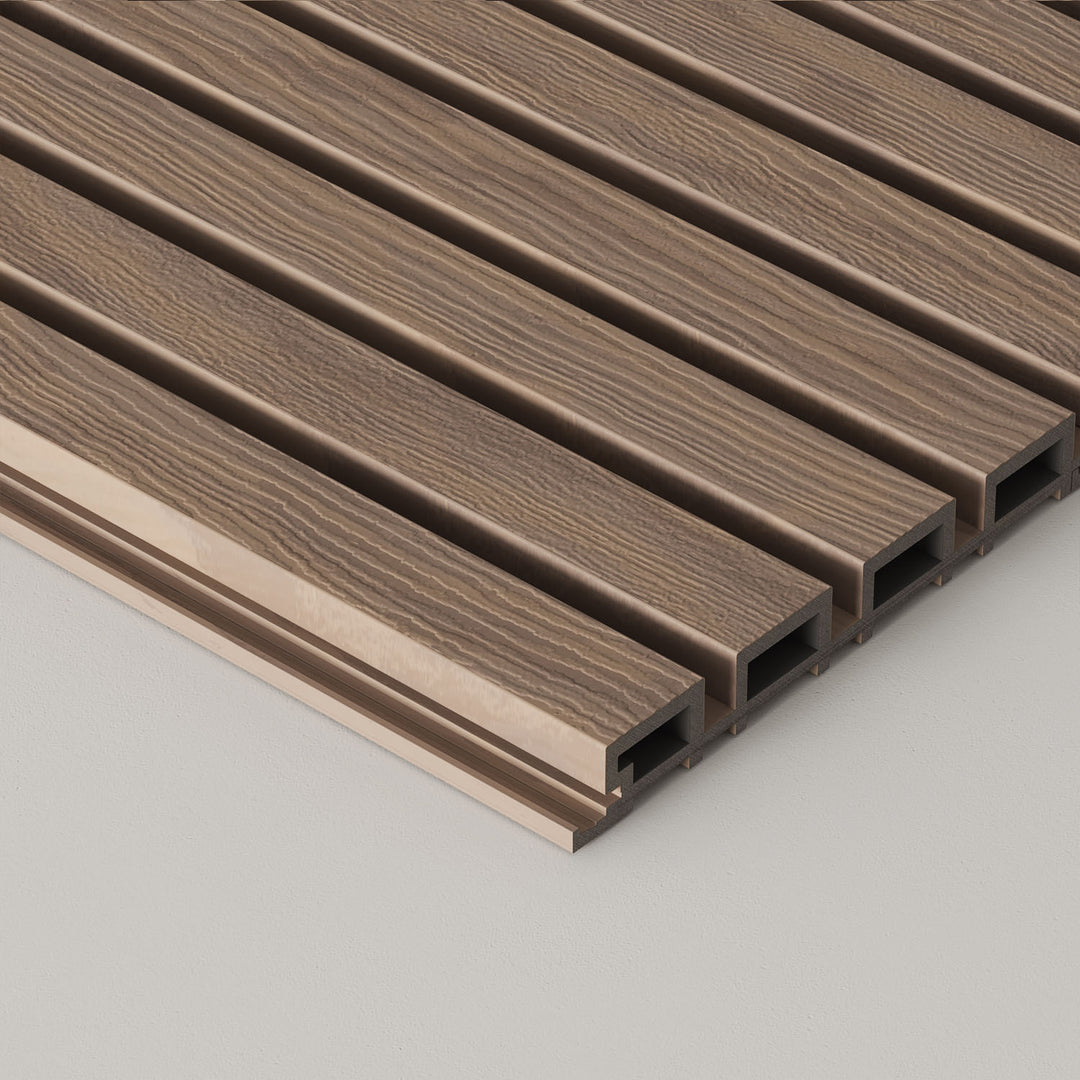
– Slat Panels: Vertical or horizontal wood-look slats that create modern, architectural facades.
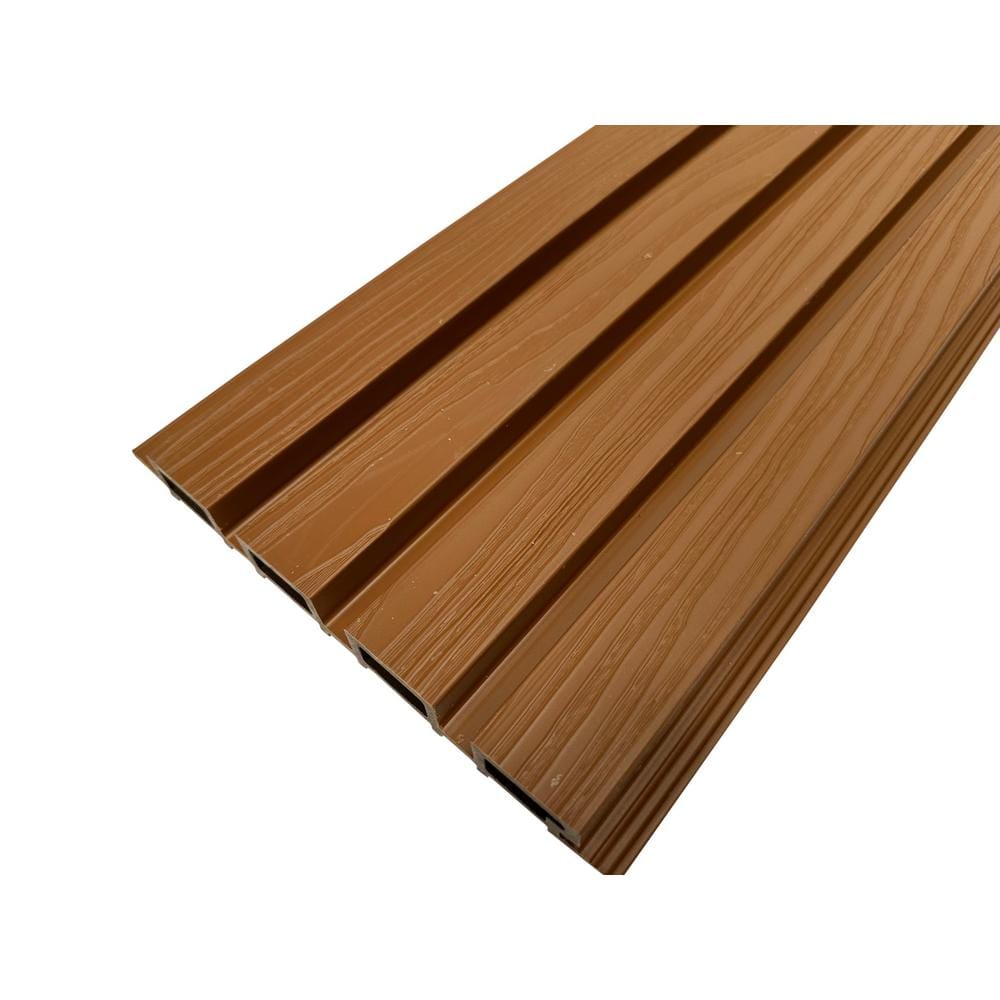
– Fluted Panels: Feature deep grooves for a 3D batten effect, ideal for statement walls and commercial buildings.
- Popular Brands*: NewTechWood UltraShield, Fiberon Wildwood, WoodPlank, NORTwood.
2. Paintable Composite Panels
Made from MDF or polymer-based cores, these are primed and ready for custom paint finishes. Ideal for interior feature walls, kitchens, and bathrooms.
- Best For*: Designers seeking full color control and seamless integration with interior palettes.
3. Waterproof Outdoor Panels
Engineered for extreme conditions, these panels are 100% waterproof and UV-resistant. Suitable for:
– Exterior facades
– Pool houses
– Outdoor kitchens
– Bathrooms and saunas
They maintain structural integrity even after years of sun, rain, and freeze-thaw cycles.
4. Acoustic Composite Panels
Designed with sound-absorbing backings (e.g., gray felt), these panels improve room acoustics while adding visual warmth. Commonly used in:
– Home theaters
– Offices
– Podcast studios
– Restaurants
Key Benefits of Composite Wood Panels
1. Realistic Aesthetics Without the Maintenance
- High-definition embossing replicates natural wood grain.
- Available in premium finishes like American Walnut, Japanese Cedar, and Shou Sugi Ban (charred wood).
- No need for annual staining, sanding, or sealing.
2. Exceptional Durability
- Resists cracking, splitting, warping, and rotting.
- Withstands heavy rain, snow, humidity, and coastal salt air.
- Proven performance in temperatures ranging from -40°F to 150°F.
3. Zero to Low Maintenance
- Clean with soap and water—no special treatments required.
- Mold and mildew resistant thanks to closed-cell structure.
- Pest-proof: termites, carpenter ants, and bees cannot penetrate.
4. Eco-Friendly & Sustainable
- Up to 95% recycled content (wood + plastic).
- Reduces landfill waste and deforestation.
- Some manufacturers recycle up to 98% of production waste.
- Compliant with green building standards like LEED and ECC (Eco-Certified Composite).
5. Fire Resistance
- Many panels meet Class B fire rating, significantly safer than untreated wood.
- Will not ignite easily and self-extinguishes when flame source is removed.
6. Design Flexibility
- Can be installed vertically, horizontally, or diagonally.
- Compatible with curves when flexible variants are used.
- Easy to cut with standard woodworking tools.
Installation Process: How to Install Composite Panels
Installing composite wood panels is straightforward and accessible for both professionals and DIYers.
Step-by-Step Guide
1. Prepare the Substrate
- Ensure wall surface is clean, dry, and structurally sound.
- Install furring strips (joists) at 16” or 24” on center using corrosion-resistant screws.
- Use aluminum or pressure-treated wood for outdoor applications.
2. Measure & Cut Panels
- Measure wall height and width.
- Cut panels to size using a fine-tooth circular saw or jigsaw.
- Pre-drill holes near edges to prevent splitting (especially for tongue-and-groove).
3. Secure the Panels
- Start at the bottom corner and work upward.
- For slat or flat panels: Screw directly through the tongue or face using exterior-grade screws.
- For tongue-and-groove: Slide panels together and fasten discreetly.
- Leave a 1/8” expansion gap between panels.
4. Finish Edges & Corners
- Use matching L-corner trims for outside corners.
- Install fascia boards around windows, doors, and rooflines for a clean, professional look.
5. Inspect & Clean
- Check alignment and secure loose fasteners.
- Wipe down with mild detergent and water.
✅ Pro Tip: Use a laser level to ensure perfectly straight installation across large surfaces.
Where to Use Composite Wood Panels
Exterior Applications
- House siding and facade cladding
- Fences and privacy screens
- Garage walls
- Outdoor kitchens and pergolas
- Commercial building exteriors
Interior Applications
- Feature walls in living rooms and bedrooms
- Kitchen backsplashes and island wraps
- Bathroom wainscoting
- Ceiling treatments
- Room dividers and acoustic walls
💡 Note: While most exterior panels can be used indoors, not all interior panels are suitable for outdoor use. Always verify product specifications.
Pricing and Cost Estimates
Composite wood panels vary in price based on size, brand, finish, and region. Below are average market rates (as of 2025):
| Product Type | Average Price per Panel | Coverage per Panel | Cost per Sq Ft |
|---|---|---|---|
| Standard Slat Panel (8′) | $90 – $190 | ~6–7 sq ft | $13 – $27 |
| Tongue-and-Groove Siding | $140 – $220 (16′) | ~10–12 sq ft | $14 – $20 |
| Fluted Panel (10′) | $150 – $250 | ~8–10 sq ft | $18 – $30 |
| Paintable MDF Panel | $60 – $120 (8′) | ~5.5 sq ft | $11 – $22 |
Additional Costs
- Trim & Accessories: $80 – $150 per pack (L-corners, fascia)
- Furring Strips: $2 – $4 per linear foot
- Professional Installation: $15 – $30 per sq ft (depending on complexity)
📌 Bulk Discounts: Many suppliers offer free shipping on orders over $999 and discounts up to 20% for large-scale projects.
Actionable Tips for Buyers & Installers
- Order Free Samples First
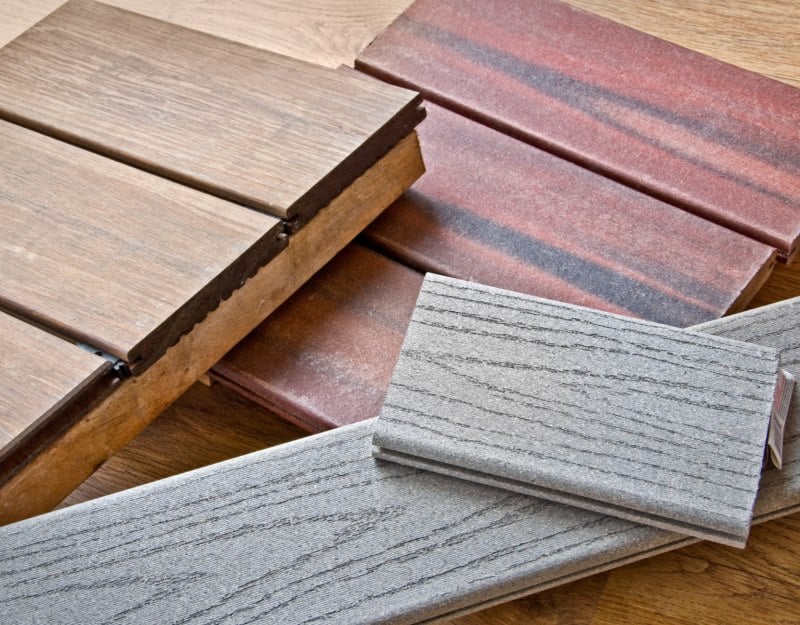
- Most reputable brands (e.g., WoodPlank, Andor Willow, WVH) offer refundable samples.
-
Test color, texture, and finish under natural and artificial light.
-
Use a Coverage Calculator
- Input wall dimensions to determine how many panels you need.
-
Always purchase 10% extra for cuts, waste, and future repairs.
-
Choose Co-Extruded Panels for Longevity
- Look for products with UltraShield® or capped composite technology.
-
These have a protective outer layer that enhances fade and stain resistance.
-
Verify Warranty Terms
- Top-tier panels come with 20–30 year limited warranties covering:
- Color fading
- Structural defects
- Mold and pest damage
-
Example: WoodPlank offers a 30-year warranty on cladding.
-
Check Local Climate Suitability
-
Ensure the product is rated for your region (e.g., freeze-thaw cycles, high UV exposure).
-
Work with Certified Distributors
- Companies like Panel Processing Inc. and Composite Panel Association (CPA) members adhere to strict quality and sustainability standards.
Conclusion
Composite wood panels represent the future of sustainable, high-performance building materials. By combining the warmth and beauty of real wood with the resilience of modern polymers, they offer a practical, eco-conscious solution for both interior and exterior applications. With zero maintenance, long warranties, and realistic aesthetics, these panels are increasingly preferred by architects, contractors, and homeowners alike.
Whether you’re renovating a home, designing a commercial space, or building a smart, energy-efficient structure, composite wood panels deliver unmatched value, durability, and visual impact.
Frequently Asked Questions (FAQ)
1. Do composite wood panels look fake?
No. Modern composite panels use high-resolution embossing and matte finishes to replicate the grain, texture, and color variation of real wood. Many people cannot tell the difference between composite and natural timber from a few feet away.
2. Can I install composite panels myself?
Yes. Most systems are DIY-friendly, requiring only basic tools like a drill, level, and circular saw. Clip-free or screw-down installation methods make setup simple for experienced handymen.
3. Will the color fade over time?
High-quality panels with UV-resistant caps (like NewTechWood UltraShield or Fiberon Wildwood) are guaranteed not to fade significantly for 20–30 years. Some brands even offer 10-year no-fade warranties.
4. Are composite panels environmentally friendly?
Yes. They are made from recycled wood and plastic, reducing landfill waste and the need for virgin timber. Many are 100% recyclable at end-of-life and manufactured using eco-conscious processes.
5. Can composite panels be used in wet areas like bathrooms?
Absolutely. Most exterior-grade composite panels are 100% waterproof and mold-resistant, making them excellent for bathrooms, kitchens, and saunas. Always confirm moisture resistance with the manufacturer before installation.