
Composite Panel Guide: Expert Tips & 2025 Update
Tired of high maintenance, costly building materials that can’t keep up with your project’s demands? Composite panels offer a smarter, stronger, and sleeker solution. Engineered for durability and style, these innovative panels combine layers of premium materials to deliver unbeatable performance—resisting fire, moisture, and impact while cutting down on construction time and costs. Whether you’re upgrading a home façade, designing a modern office, or building a retail space, composite panels provide lightweight versatility without sacrificing strength. With a flawless finish that lasts years with minimal upkeep, they’re redefining modern architecture and interior design. Discover how composite panels are transforming spaces across industries—efficient, sustainable, and stunning.
How Composite Panels Work: A Comprehensive Guide for Industrial and Architectural Applications
Composite panels are engineered sandwich structures composed of two high-strength outer layers (skins) bonded to a lightweight core material, delivering exceptional strength-to-weight ratios, thermal insulation, and design versatility. These panels are widely used across industries—from aerospace and transportation to commercial construction and architectural cladding—due to their ability to combine durability, performance, and aesthetic appeal in a single, efficient system.
Unlike traditional solid materials, composite panels leverage the synergy between their constituent layers: the skins provide tensile and compressive strength, while the core adds stiffness, reduces weight, and often contributes to thermal or acoustic insulation. This structural efficiency makes them ideal for applications where performance, weight savings, and long-term value are critical.
This guide provides a detailed breakdown of how composite panels work, their types, benefits, applications, cost considerations, and best practices for selection and implementation.
How Composite Panels Are Constructed
Composite panels follow a layered “sandwich” design principle, typically consisting of five key elements:
1. Outer Skin (Face Sheet)
2. Adhesive Layer
3. Core Material
4. Adhesive Layer
5. Inner Skin (Back Sheet)
This construction mimics the mechanics of an I-beam, where the skins act as the flanges (resisting bending and tension), and the core functions as the web (resisting shear forces). The greater the distance between the skins (i.e., thicker core), the higher the panel’s stiffness—without a proportional increase in weight.
Core Materials and Their Functions
The core is the central component that defines many of the panel’s performance characteristics. Common core types include:
- Honeycomb (Aluminum, Aramid, or Composite): Offers the highest strength-to-weight ratio. Used in aerospace and high-performance applications.
- Foam (Polyethylene, Polypropylene, PVC, or Polyurethane): Provides excellent thermal and acoustic insulation. Common in architectural panels.
- Corrugated Plastic or Laminated Fiberboard: Lightweight and cost-effective. Used in signage, temporary structures, and packaging.
- Wood or Particleboard Core: Found in decorative wall panels and interior fit-outs.
Skin Materials
The outer skins determine the panel’s durability, finish, and resistance to environmental factors. Popular skin materials include:
- Aluminum (in Metal Composite Material – MCM): Lightweight, corrosion-resistant, and easily formable. Ideal for façades.
- Fiberglass-Reinforced Plastic (FRP): High impact resistance and chemical durability. Used in industrial and marine environments.
- Steel or Stainless Steel: For heavy-duty structural applications.
- High-Pressure Laminate (HPL) or Decorative Veneers: For aesthetic interior surfaces.
Adhesives are carefully selected based on operating conditions—such as temperature, moisture, and chemical exposure—to ensure long-term bonding integrity.
Types of Composite Panels and Their Applications
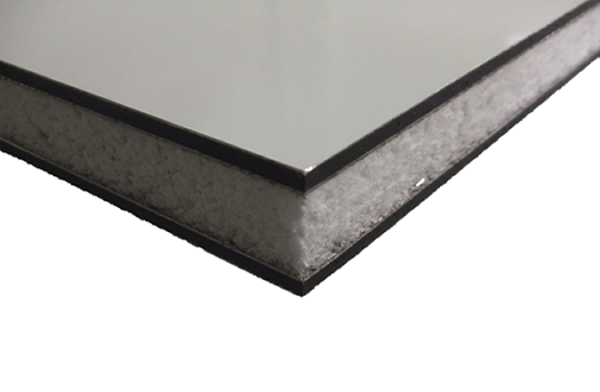
Composite panels are tailored to meet specific industry demands. Below are the most common types and their primary uses.
1. Metal Composite Material (MCM) Panels
- Structure: Two thin aluminum skins thermobonded to a polyethylene or fire-retardant core.
- Thickness: Typically 3mm to 6mm (1/8” to 1/4”).
- Applications:
- Commercial building façades
- Retail storefronts
- Interior wall cladding
-
Signage
-
Example: The PAC-3000 CS and RS* systems from PAC-CLAD use MCM for architectural wall panels with rain-screen capabilities and precise dimensional tolerances.
2. Honeycomb Panels
- Structure: High-strength skins (aluminum, fiberglass, or carbon fiber) over a honeycomb core (aluminum, Nomex, or plastic).
- Advantages: Extremely stiff and lightweight.
- Applications:
- Aircraft interiors and flooring
- High-speed rail and marine bulkheads
- Cleanroom walls
-
Luxury yachts and military vehicles
-
Example: Plascore* manufactures honeycomb panels used in aerospace and defense, where strength, fire resistance, and weight savings are critical.
3. Insulated Composite Wall Panels (ICWP)
- Structure: Includes insulation (e.g., polyiso) between structural skins, often with integrated framing.
- Thermal Performance: R-values range from R-16.5 to R-30+.
- Applications:
- Foundation walls (e.g., Composite Panel Systems in Wisconsin)
- Cold storage buildings
-
Energy-efficient residential and commercial basements
-
Example: The EPITOME Foundation Composite Wall* integrates insulation, vapor barrier, and stud framing into a single 9-foot panel, reducing installation time to under two hours.
4. Lightweight Structural Panels
- Structure: Often made from polypropylene tri-laminate or corrugated plastic with laminate skins.
- Features: Water-resistant, easy to cut, and chemically inert.
- Applications:
- Truck liners and trailers
- Modular enclosures
- Temporary partitions
-
Display fixtures
-
Example: TCH offers 1/4” and 3/8” polypropylene tri-laminate panels* in black, blue, and gray—ideal for industrial and electronic enclosures.
5. Decorative and Sustainable Composite Panels
- Certifications: Often meet ECC (Eco-Certified Composite) or TSCA Title VI standards.
- Materials: Use recycled wood fibers, low-emission resins, and formaldehyde-free binders.
- Applications:
- Interior design
- Kitchen cabinets
- Retail millwork
-
Office furniture
-
Example: The Composite Panel Association (CPA)* promotes sustainable manufacturing and certifies products that meet rigorous environmental benchmarks.
Benefits of Using Composite Panels
1. High Strength-to-Weight Ratio
Composite panels offer superior stiffness and strength while being significantly lighter than solid materials. This reduces structural loading and transportation costs.
2. Design Flexibility
Available in a wide range of finishes—including wood grain, metallic, matte, gloss, and custom colors—panels can be cut, shaped, and formed to meet architectural or engineering requirements.
3. Energy Efficiency
Insulated composite panels provide excellent thermal resistance, reducing HVAC loads and improving building energy performance.
4. Fast Installation
Many systems are designed for rapid, tool-free assembly, minimizing labor costs and project timelines. Some panels install in under two hours without specialized training.
5. Durability and Low Maintenance
Resistant to moisture, corrosion, UV degradation, and impact, composite panels require minimal upkeep over decades of service.
6. Sustainability
Many composite panels use recycled content and are fully recyclable. Certifications like ECC and ULEF-NAF ensure low environmental impact.
Actionable Tips for Selecting and Using Composite Panels
To maximize performance and value, consider the following best practices:
1. Define Your Performance Requirements
- Ask: Is the panel for structural, insulative, or decorative use?
- Determine required R-value, fire rating, load capacity, and chemical resistance.
2. Choose the Right Core for the Environment
- Use fire-retardant cores in commercial buildings.
- Opt for closed-cell foam in high-moisture areas.
- Select honeycomb for high-stress mechanical applications.
3. Verify Fire and Safety Compliance
Ensure panels meet ASTM E84, NFPA 285, or local building codes, especially for façades and interior walls.
4. Work with Certified Manufacturers
Partner with suppliers who provide engineering support, installation training, and warranty coverage. Companies like Plascore, Carbon-Core, and PAC-CLAD offer full technical documentation and CNC fabrication services.
5. Plan for Fabrication and Installation
- Use CNC routing for precise cuts and edge detailing.
- Account for thermal expansion in large façade installations.
- Use floating clip systems (like PAC-3000 RS) to allow movement and prevent stress cracking.
Pricing and Cost Estimates
Composite panel pricing varies significantly based on material type, thickness, finish, and order volume. Below are market estimates as of 2024–2025:
| Panel Type | Average Price Range (per sq. ft.) | Notes |
|---|---|---|
| Aluminum MCM Panels | $8.00 – $15.00 | Higher for custom colors or fire-rated cores |
| Honeycomb Panels (Aluminum Core) | $12.00 – $25.00 | Aerospace-grade can exceed $30/sq. ft. |
| FRP or Fiberglass Panels | $6.00 – $10.00 | Depends on gelcoat and thickness |
| Polypropylene Tri-Laminate | $7.00 – $14.00 | TCH offers 1/2″ panels for ~$275 for 5.3×2.3 ft |
| Insulated Foundation Panels | $20.00 – $40.00 | Includes labor savings and faster ROI |
- Note:*
- Carbon-Core Corporation lists composite sheets from $240 to $456 per 4×8 ft panel (6mm to 50mm core).
- Volume discounts apply for orders over 500 sq. ft.
- Custom sizes, CNC cutting, gelcoating, or sanding add $0.40–$0.85 per sq. ft.
Prices are typically F.O.B. origin (e.g., Troy, VA), with shipping costs extra.
Conclusion
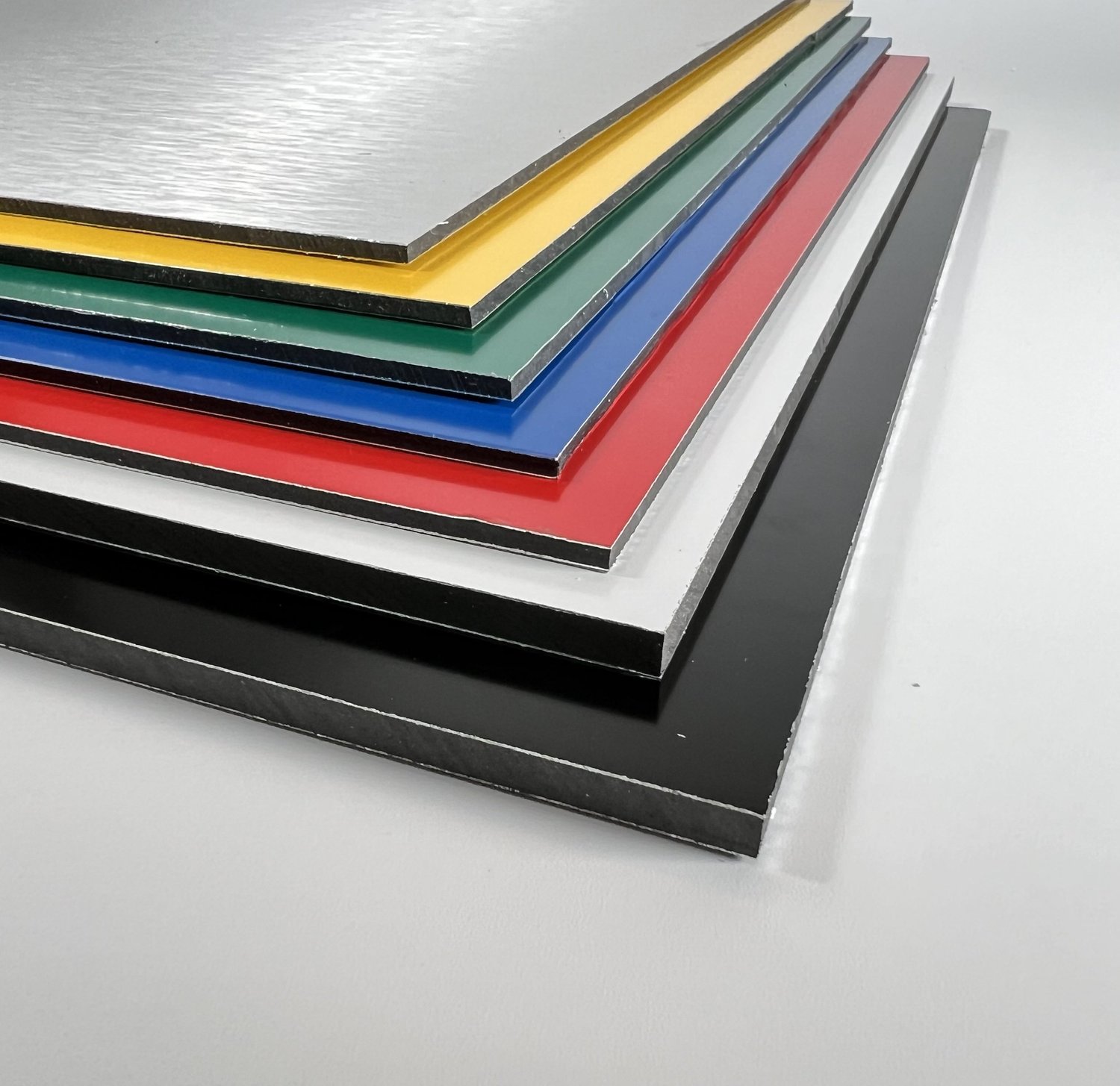
Composite panels represent a transformative advancement in material engineering, combining structural performance, energy efficiency, and design freedom in a single solution. Whether used in high-rise façades, aerospace interiors, or energy-efficient foundations, their layered construction delivers unmatched value across industries.
By understanding the core types, skin materials, and performance trade-offs, engineers, architects, and contractors can select the right panel for their application—optimizing cost, durability, and sustainability. With growing emphasis on green building and rapid construction, composite panels are poised to remain a cornerstone of modern industrial and architectural design.
Frequently Asked Questions (FAQ)
1. What is the difference between MCM and honeycomb panels?
MCM (Metal Composite Material) uses a solid polymer core (often polyethylene) between two aluminum skins, ideal for architectural cladding. Honeycomb panels have a cellular core (aluminum, Nomex, or plastic), offering higher stiffness and strength for aerospace and structural applications.
2. Are composite panels fire-resistant?
Standard MCM panels with polyethylene cores are combustible. However, fire-retardant (FR) cores are available and required for high-rise buildings. Always verify compliance with NFPA 285 or local codes.
3. Can composite panels be recycled?
Yes, many composite panels—especially aluminum-based MCM—are recyclable. Sustainable options with ECC certification use low-emission binders and recycled content.
4. How are composite panels installed?
Installation methods vary:
– Mechanical clips for façades (e.g., PAC-3000 RS rain-screen)
– Adhesive bonding for interior walls
– Staggered angle brackets for modular systems
Some panels, like foundation walls, use interlocking or fastening systems for rapid assembly.
5. What is the lifespan of a composite panel?
Most high-quality composite panels last 20–50 years, depending on environment and maintenance. Aluminum and FRP panels in architectural applications typically carry 10–15 year finish warranties, with structural integrity lasting much longer.