
Aluminum Composite Panel Details: 2025 Expert Guide
Tired of sifting through confusing building material specs only to end up with underwhelming façade results? Aluminum composite panel (ACP) details hold the key to sleek, durable, and cost-effective architectural finishes—when you know how to get them right. From seamless joints to thermal efficiency and structural integrity, the devil is in the details. Whether you’re a contractor, architect, or builder, understanding ACP installation specifics, panel composition, and fixing methods can save time, reduce waste, and elevate your project’s aesthetics. Discover how proper detailing ensures weather resistance, fire safety, and long-term performance. Get the inside knowledge on choosing core types, edge sealing, and system compatibility that top professionals rely on. Mastering aluminum composite panel details isn’t just about looks—it’s about building smarter, safer, and more sustainably.
How Aluminum Composite Panel Details Work: A Comprehensive Guide
Direct Answer:
Aluminum composite panel (ACP) details refer to the technical specifications, joint configurations, and installation methodologies used in applying aluminum composite material (ACM) panels to building façades, interiors, and signage. These details define how panels are joined, fastened, sealed, and integrated with insulation, flashings, corners, and architectural elements like windows, doors, and copings. Key systems include rainscreen (dry joint), wet seal, and face-fastened methods, each with specific fabrication and weatherproofing characteristics. Proper detailing ensures structural integrity, water management, thermal performance, and aesthetic continuity.
Understanding Aluminum Composite Panels (ACM/ACP)
Aluminum composite panels (ACPs), also known as aluminum composite material (ACM), are engineered sandwich panels consisting of two thin aluminum alloy skins bonded to a core material—typically polyethylene (PE) or fire-retardant mineral-filled core (e.g., FR, A2). The standard panel thickness ranges from 3mm to 6mm, with aluminum skin thicknesses from 0.2mm to 0.5mm.
These panels are prized for their:
– Lightweight nature (3–5 kg/m²),
– High strength-to-weight ratio,
– Excellent flatness and dimensional stability,
– Design versatility in color, finish, and form.
Core Types and Fire Performance
| Core Type | Characteristics | Fire Rating | Best For |
|---|---|---|---|
| Polyethylene (PE) | Lightweight, cost-effective | Limited (Class B/C) | Low-rise, non-combustible zones |
| Fire-Retardant (FR) | Contains ATH or MDH additives | Class A (ASTM E84), NFPA 285 compliant | High-rise, commercial buildings |
| Mineral Core (A2) | Non-combustible | A2-s1,d0 (EU), Class A | High-safety applications |
Note: In many jurisdictions, PE-core panels are restricted on buildings over 18 meters due to fire safety regulations post-Grenfell Tower incident.
Key Aluminum Composite Panel Systems and Installation Methods
Dry Joint / Rainscreen Systems
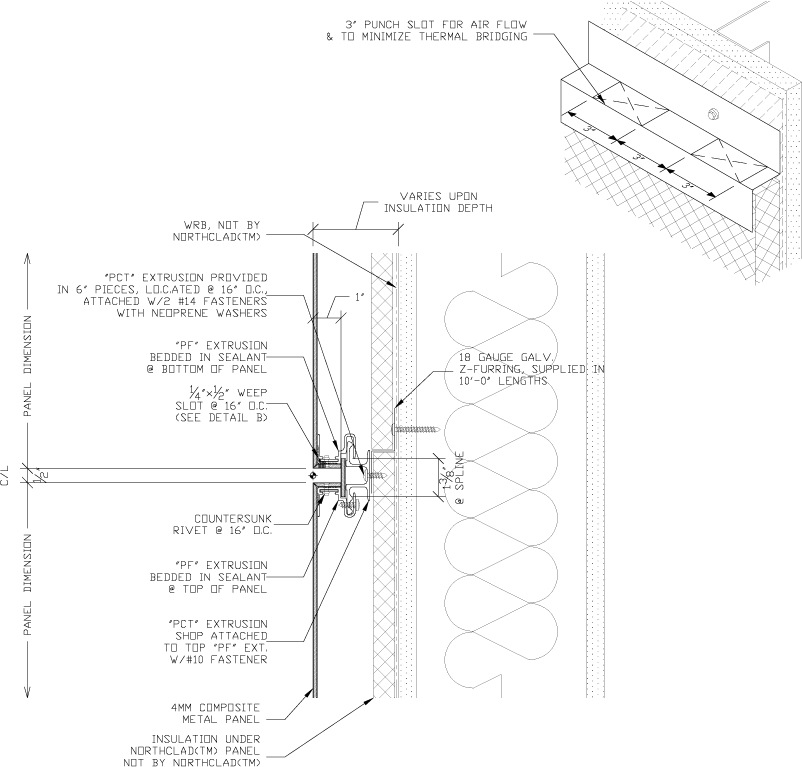
The dry joint or rainscreen system is the most advanced and widely used method for exterior façades. It features hidden fasteners, clean visual lines, and pressure-equalized joints that manage moisture.
How It Works:
- Panels are mechanically clipped onto a substructure using angle brackets or carrier rails.
- Joints between panels are open or capped with matching reveal strips.
- Air cavity behind panels allows drainage and ventilation, reducing moisture buildup.
Benefits:
- No visible fasteners = sleek, modern appearance.
- Thermal movement accommodation via floating installation.
- Superior weather resistance through controlled drainage.
Common Brands: ALUCOBOND® Dry Reveal, PAC-3000 RS, NorthClad Rainscreen.
Wet Seal System
The wet seal system uses silicone sealants applied at panel joints to create a water-tight, monolithic appearance.
Key Features:
- Panels are adhered or mechanically fastened to the substrate.
- Joints are filled with high-performance silicone (e.g., 20–25mm depth).
- No air cavity—acts as a barrier wall.
Advantages:
- Smooth, seamless façade ideal for curved or flat designs.
- Faster installation in moderate climates.
- Suitable for interior applications and low-exposure exteriors.
Limitations:
- Higher maintenance: Silicone degrades over time (15–20 year lifespan).
- Risk of water entrapment if sealant fails.
- Not recommended for high-wind or seismic zones without structural bonding.
Common Use: Commercial signage, interior wall cladding, soffits.
Face-Fastened System
In face-fastened installations, screws or rivets are visible on the panel surface, typically covered with color-matched caps.
Characteristics:
- Fasteners penetrate through the panel face into a supporting subframe.
- Economical for simple geometries and low-budget projects.
Pros & Cons:
| Pros | Cons |
|---|---|
| Lower installation cost | Visible fasteners reduce aesthetics |
| Easy field modifications | Risk of water infiltration at screw points |
| Suitable for retrofit projects | Requires precise drilling to avoid core damage |
Best for: Industrial buildings, temporary structures, interior partitions.
Critical Panel Detailing Zones
Architectural drawings and technical details define how ACM panels integrate with building elements. Below are the most common detailing zones:
Horizontal and Vertical Joints
- Reveal Width: Typically 10–20mm, filled with EPDM gaskets or silicone.
- Rainscreen: Uses pressure-equalized joints with drainage paths.
- Wet Seal: Fully sealed with backer rod and silicone.
Base and Sill Details
- Must include weep holes and flashing to direct water away.
- Base trim often extends below finished grade with drip edge.
- Insulation must be elevated above moisture-prone zones.
Corners (Inside & Outside)
- Mitered corners provide clean, seamless transitions.
- L-shaped corner panels or separate corner trims used for durability.
- Flashing integrated behind joints to prevent water ingress.
Window, Door, and Louver Interfaces
- Critical for water management.
- Head, jamb, and sill flashings must be lapped correctly (top to bottom).
- Use continuous sealant beads or pre-formed gaskets at transitions.
Coping and Parapet Details
- Composite coping panels cap parapet walls.
- Must allow thermal expansion and water runoff.
- Often integrated with sheet metal flashings.
Insulated vs. Non-Insulated Systems
| Feature | With Insulation | Without Insulation |
|---|---|---|
| R-Value | Up to R-15 (with polyiso) | R-0.0057 (panel only) |
| Application | Energy-efficient façades | Aesthetic cladding |
| Substrate | Requires thermal break | Direct fastening possible |
| Detail Complexity | Higher (vapor barrier, cavity) | Simpler |
Insulated systems are used in cold climates or high-performance buildings to reduce thermal bridging.
Fabrication and Installation Best Practices
Panel Fabrication
- Cutting: Use carbide-tipped blades or CNC routers.
- Routing: For edge profiling and clip channels (e.g., rout-and-return method).
- Bending: Limited to small radii; avoid sharp folds to prevent core cracking.
- Cleaning: Wipe with neutral pH cleaner; avoid solvents.
Handling and Storage
- Store panels flat on pallets, protected from moisture and UV.
- Use edge protectors during transport.
- Avoid stacking more than 1.5m high.
On-Site Installation
- Substructure Preparation: Install galvanized or stainless steel rails with proper leveling.
- Panel Fixing: Start from bottom up, left to right.
- Sequencing: Install base → corners → field panels → openings → coping.
- Quality Checks: Verify alignment, joint width, and sealant adhesion.
Actionable Tips for Designers and Contractors
- ✅ Consult the Fabricator Early: Details vary by manufacturer and project. Engage a certified ACM fabricator during design.
- ✅ Specify Fire-Rated Panels for High-Rise: Use FR or A2 core where required by code (IBC, NFPA 285).
- ✅ Include Expansion Gaps: Allow 3–5mm per meter for thermal movement.
- ✅ Use Compatible Sealants: Silicone must be non-corrosive and ACM-rated (e.g., Dow Corning 795).
- ✅ Detail Flashings Correctly: Flashings should extend 150mm behind panels and be lapped shingle-style.
- ✅ Avoid Direct Ground Contact: Elevate base trim 50–100mm above grade.
Pricing and Cost Estimates (2025 Market)
| Item | Cost Range (USD) | Notes |
|---|---|---|
| ACM Panels (3–4mm, standard finish) | $8 – $15 / sq.ft | PE core, standard colors |
| Fire-Retardant Panels (FR/A2) | $12 – $22 / sq.ft | Higher due to core additives |
| Custom Colors / Wood Grain | $18 – $30 / sq.ft | PVDF or FEVE coatings |
| Installation (labor + substructure) | $20 – $40 / sq.ft | Varies by system complexity |
| Rainscreen System (fully installed) | $35 – $60 / sq.ft | Includes insulation, rails, flashings |
Note: Costs are project-dependent and vary by region, panel size, and design complexity.
Conclusion
Aluminum composite panel details are critical to the performance, safety, and longevity of modern façades and architectural elements. Whether using a rainscreen, wet seal, or face-fastened system, proper detailing ensures weather resistance, fire safety, and aesthetic integrity. Designers and contractors must collaborate with certified fabricators, adhere to building codes, and select the right core type and finish for the application. With correct implementation, ACM panels offer a cost-effective, durable, and visually striking solution for both commercial and residential projects.
Frequently Asked Questions (FAQ)
1. What is the difference between ACM and ACP?
There is no technical difference—ACM (Aluminum Composite Material) and ACP (Aluminum Composite Panel) are interchangeable terms. ACM is often used in technical specs, while ACP is common in architectural contexts.
2. Can aluminum composite panels be used on high-rise buildings?
Yes, but only with fire-retardant (FR) or mineral (A2) cores. PE-core panels are prohibited in many high-rise applications due to fire risks. Compliance with NFPA 285 is mandatory in the U.S. for buildings over 40 feet.
3. How long do ACM panels last?
With proper installation and maintenance, ACM panels can last 25–30 years or more. PVDF-coated panels retain color and finish for decades, even in harsh climates.
4. Can ACM panels be curved or bent?
Yes, but only with specialized equipment. Panels can be roll-formed or pressed into curves, typically with a minimum radius of 1.5m. Sharp bends risk delamination.
5. Are aluminum composite panels recyclable?
Yes, ACM panels are 100% recyclable. The aluminum skins can be separated from the core and reused, supporting sustainable construction practices. Many manufacturers use recycled aluminum in production.