
Is Galvanized Steel Magnetic? Expert Guide 2025
Ever tried hanging a tool on what you thought was magnetic galvanized steel—only to find it sliding right off? You’re not alone. Many DIYers and professionals alike assume all steel is magnetic, but with galvanized steel, the answer isn’t always straightforward. The truth? Galvanized steel is magnetic—but only because of the underlying steel, not the zinc coating. Understanding this difference can save you time, money, and frustration on projects ranging from fencing to workshop organization. In this guide, uncover what makes galvanized steel magnetic, how the galvanization process affects magnetic properties, and when to rely on magnetism for installation or safety checks. Get the clarity you need before your next build.
Is Galvanized Steel Magnetic?
Yes, galvanized steel is generally magnetic. This is because the base material—typically carbon steel—is inherently ferromagnetic, and the thin zinc coating applied during galvanization does not interfere with its magnetic properties. While zinc itself is non-magnetic, it is too thin to block or alter the magnetic field generated by the underlying steel. Therefore, galvanized steel retains the magnetic characteristics of its steel substrate.
However, exceptions exist. If the base steel is made from a non-magnetic alloy—such as austenitic stainless steel (e.g., grades 304 or 316)—then the resulting galvanized product will not be magnetic. That said, galvanizing austenitic stainless steel is rare and typically unnecessary, as these alloys already possess excellent corrosion resistance.
Below, we explore the science behind magnetism in galvanized steel, its implications for industrial applications, and practical considerations for engineers, fabricators, and project managers.
What Makes Steel Magnetic?
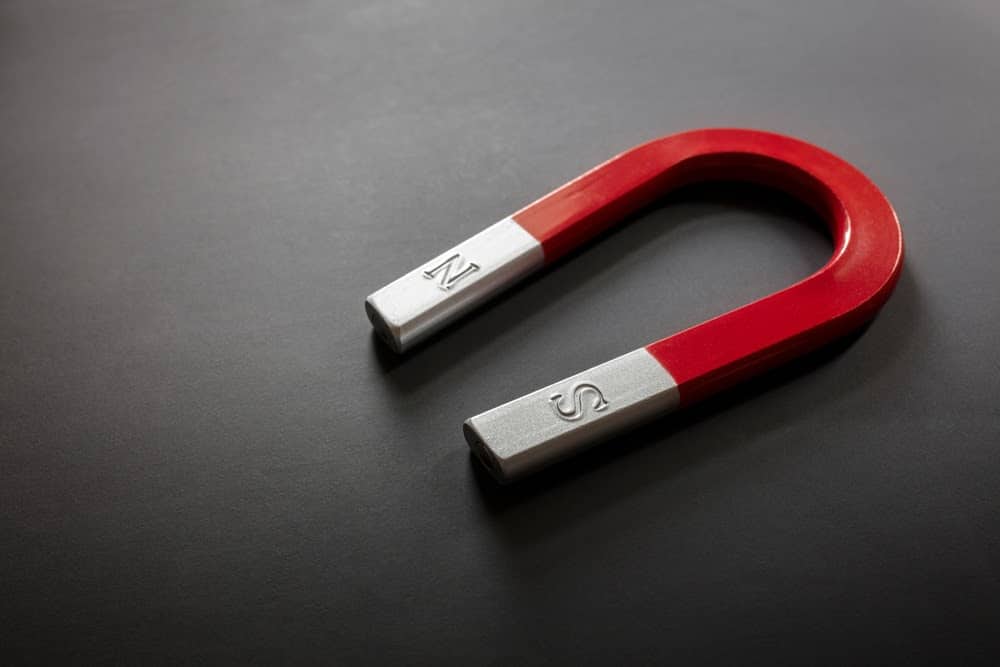
To understand why galvanized steel is magnetic, we must first examine the magnetic nature of steel itself.
Ferromagnetism in Metals
Magnetism in metals arises from the alignment of electron spins within the atomic structure. Ferromagnetic materials—like iron, nickel, and cobalt—have unpaired electrons whose magnetic moments align in the same direction when exposed to a magnetic field, creating a strong, persistent attraction.
Steel is primarily composed of iron, which is strongly ferromagnetic. Most common structural steels are carbon steels, made by combining iron with small amounts of carbon (typically 0.05% to 2%). These alloys retain the ferromagnetic properties of iron, making them highly responsive to magnets.
Crystal Structure and Magnetic Behavior
The magnetic behavior of steel also depends on its crystal structure, which is influenced by alloying elements and heat treatment:
- Ferritic and martensitic steels: Have a body-centered cubic (BCC) structure and are magnetic.
- Austenitic steels: Have a face-centered cubic (FCC) structure and are generally non-magnetic, especially in their annealed state.
Since most galvanized steel uses carbon steel (ferritic), it remains magnetic after galvanization.
How Galvanization Works
Galvanization is a corrosion-protection process that coats steel with a layer of zinc. The most common method is hot-dip galvanizing (HDG).
The Hot-Dip Galvanizing Process
- Cleaning: Steel is cleaned using alkaline solutions, acid pickling, and fluxing to remove oxides and contaminants.
- Immersion: The clean steel is dipped into a bath of molten zinc (typically at ~450°C).
- Alloy Formation: A metallurgical reaction forms zinc-iron alloy layers, creating a strong, bonded coating.
- Cooling: The steel is withdrawn and cooled, resulting in a spangled, grayish finish.
The final coating consists of:
– Inner alloy layers (zinc-iron)
– Outer pure zinc layer
Despite this coating, the core remains unchanged—and so do its magnetic properties.
Why the Zinc Coating Doesn’t Affect Magnetism
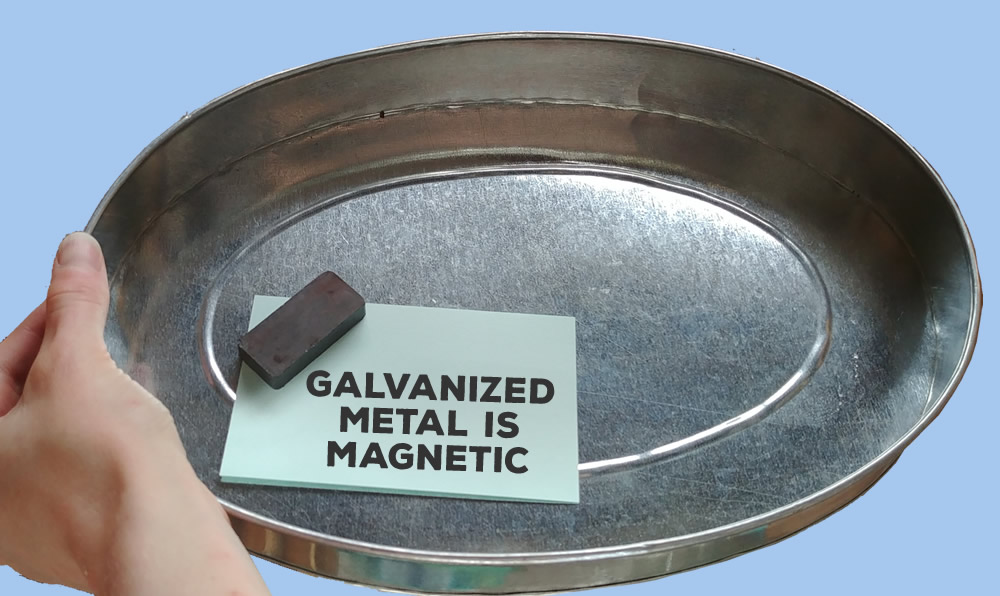
Zinc Is Not Magnetic
Zinc is diamagnetic, meaning it weakly repels magnetic fields and does not retain magnetism. Unlike iron, it lacks the electron configuration required for ferromagnetism.
However, the zinc layer in galvanized steel is extremely thin—typically 1.4 to 3.9 mils (35 to 100 microns)—far thinner than the steel substrate. This means:
- The magnetic field easily penetrates the zinc layer.
- The ferromagnetic steel underneath dominates the magnetic response.
- The overall magnetic strength is only slightly reduced, if at all.
Magnetic Permeability and Coating Thickness
Magnetic permeability refers to how easily a material supports the formation of a magnetic field. Steel has high permeability; zinc does not. But because the zinc layer is so thin, its low permeability has negligible impact on the total magnetic performance.
In practical terms:
– A magnet will stick firmly to galvanized steel.
– Magnetic sensors, clamps, and lifting devices work effectively on galvanized surfaces.
– The coating does not interfere with electromagnetic applications like motors or transformers (where steel cores are used).
When Is Galvanized Steel Not Magnetic?
While most galvanized steel is magnetic, there are rare exceptions:
1. Non-Magnetic Base Alloys
If the underlying steel is austenitic stainless steel (e.g., 304, 316), it will not be magnetic—even after galvanizing. These steels contain high levels of nickel and chromium, which stabilize the austenitic (FCC) structure and suppress ferromagnetism.
However:
– Galvanizing stainless steel is rare and not recommended.
– Stainless steel already resists corrosion; adding zinc offers little benefit.
– The galvanizing process can damage passive oxide layers on stainless steel.
2. Cold Working Effects
Some austenitic stainless steels can become slightly magnetic after cold working (e.g., bending, rolling), due to partial transformation to martensite. If such steel were galvanized (hypothetically), it might show weak magnetism.
3. Additional Coatings
Paint, powder coating, or other surface treatments over galvanized steel can slightly reduce magnetic attraction, but the effect is minimal unless the coating is very thick.
Applications Where Magnetism Matters
The magnetic nature of galvanized steel has real-world implications across industries.
Construction & Infrastructure
- Magnetic tools and sensors used in rebar detection, stud finders, and structural inspections work reliably on galvanized steel framing and rebar.
- Crane lifting magnets can handle galvanized steel beams and plates safely.
Manufacturing & Fabrication
- Magnetic chucks and clamps in CNC machining and welding setups hold galvanized sheets securely.
- Automated handling systems use magnetic conveyors or grippers for galvanized components.
Electrical & Grounding Systems
- Galvanized steel is commonly used in grounding rods and enclosures.
- While zinc has lower conductivity than copper, galvanized steel still conducts electricity well enough for grounding.
- Its magnetism does not interfere with grounding performance.
Automotive Industry
- Many car body parts and undercarriage components are made from galvanized steel.
- Magnetic mounts (e.g., for GPS units or dash cams) adhere well to galvanized surfaces.
Actionable Tips for Engineers and Fabricators
When working with galvanized steel, consider the following:
✅ Do:
- Use magnets for identification: A simple magnet test can help confirm whether a metal is galvanized carbon steel.
- Leverage magnetic tools: Magnetic levels, clamps, and holders work effectively on galvanized surfaces.
- Ensure ventilation when welding: Remove zinc from weld zones to avoid toxic fumes (“zinc fume fever”).
- Verify base material: Always check the steel grade—especially if magnetism is critical for your application.
❌ Avoid:
- Galvanizing stainless steel: It’s unnecessary and may compromise corrosion resistance.
- Relying on magnetism alone for material verification: Some coated steels (e.g., aluminized) may also be magnetic. Use chemical or XRF testing for confirmation.
- Exposing galvanized steel to strong acids or salts long-term: While resistant, prolonged exposure can degrade the zinc layer and expose the base steel.
Pricing and Market Considerations
Galvanized steel typically costs 10–25% more than bare carbon steel, depending on thickness, size, and galvanizing method.
Average Price Ranges (U.S. Market, 2025):
| Product | Price Range (per ton) |
|---|---|
| Galvanized Steel Coil | $800 – $1,100 |
| Galvanized Rebar | $900 – $1,300 |
| Galvanized Sheet (24 ga) | $1.20 – $1.80 per sq ft |
| Hot-Dip Galvanizing Service | $0.30 – $1.50 per lb (varies by size and complexity) |
Factors affecting cost:
– Zinc market prices (fluctuate based on global supply)
– Coating thickness (heavier coatings cost more)
– Fabrication complexity (intricate parts cost more to galvanize)
Despite the premium, galvanized steel offers long-term savings due to reduced maintenance and extended service life—often 50+ years in moderate environments.
Conclusion
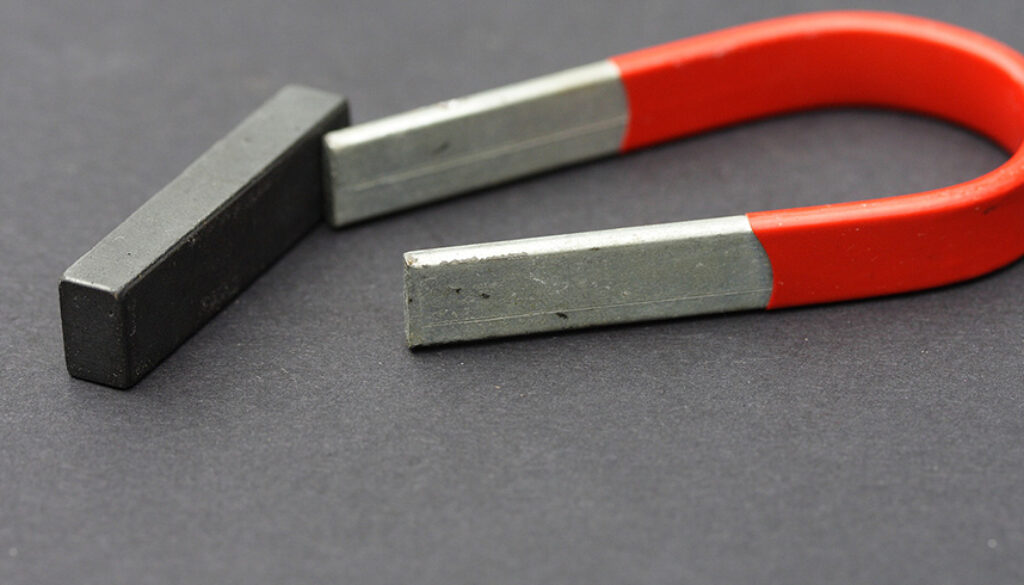
Galvanized steel is magnetic in the vast majority of cases, thanks to its ferromagnetic carbon steel base. The thin, non-magnetic zinc coating does not interfere with this property, making galvanized steel fully compatible with magnetic tools, sensors, and industrial systems.
Exceptions arise only when the base material is non-magnetic—such as austenitic stainless steel—but galvanizing such materials is uncommon and generally not practical.
For engineers, builders, and fabricators, the magnetic nature of galvanized steel is an asset, enabling reliable use in structural, mechanical, and electrical applications. Understanding this property helps ensure correct material selection, safe handling, and optimal performance in real-world projects.
Frequently Asked Questions (FAQ)
1. Can a magnet stick to galvanized steel?
Yes, a magnet will stick to galvanized steel if the base material is carbon steel or another magnetic alloy. The zinc coating does not prevent magnetic attraction.
2. Is the zinc coating on galvanized steel magnetic?
No, zinc is not magnetic. It is diamagnetic and does not attract magnets. However, the underlying steel is magnetic, so the overall material responds to magnets.
3. Does galvanizing weaken a steel’s magnetism?
No, galvanizing does not weaken the magnetic properties of steel. The thin zinc layer has negligible impact on magnetic permeability or strength.
4. Can you demagnetize galvanized steel?
Yes, but it’s not recommended. Demagnetization requires heating steel above its Curie temperature (~770°C), which would destroy the zinc coating and release toxic zinc oxide fumes.
5. Why does magnetism matter in galvanized steel applications?
Magnetism is important for:
– Using magnetic tools and sensors in construction and manufacturing.
– Lifting and handling with magnetic cranes.
– Ensuring compatibility with electromagnetic systems like motors or transformers.
– Material identification in recycling and fabrication.